Monday, 20 January 2014

Inception - A Postmodern Text?

Hyper-Reality:
During the film, the mind is opened or 'entered' into another world or reality which in ways can be seen as more desirable than what is 'Real Life'. What the audience knows is not reality (so the entire film) is made as if it is intact real, and this is portrayed to to the audience in such a way (it may appear more desirable) that they start to believe it is real. People after the film may even start to question when they are 'dreaming' or what if & there perception of reality may change even if just for a moment.


Intertextuality:
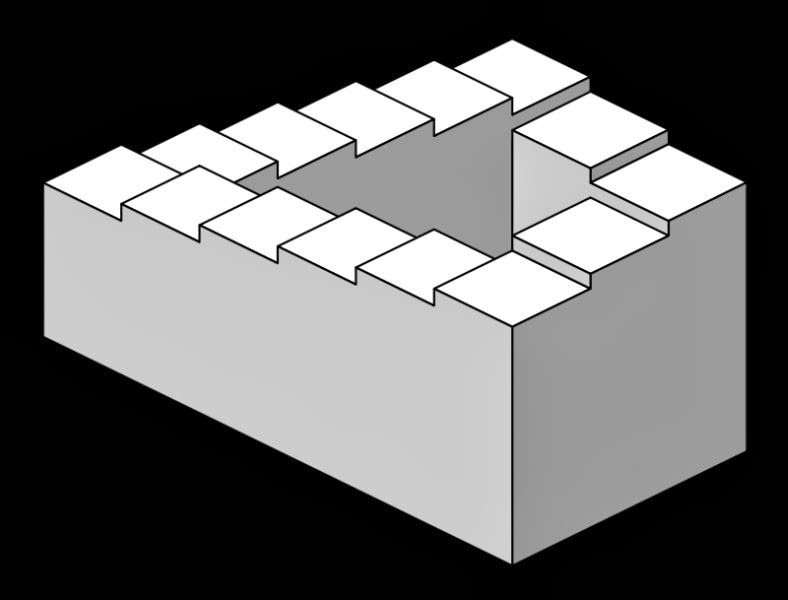
Lionel and Roger Penrose were the creators of the Penrose or Impossible staircase which is referenced within the film. The reference in the film expands on the point that anything is possible from within the dream, and that these dreams can be moulded or shaped by the Architect - In this case Lionel and Roger Penrose. 


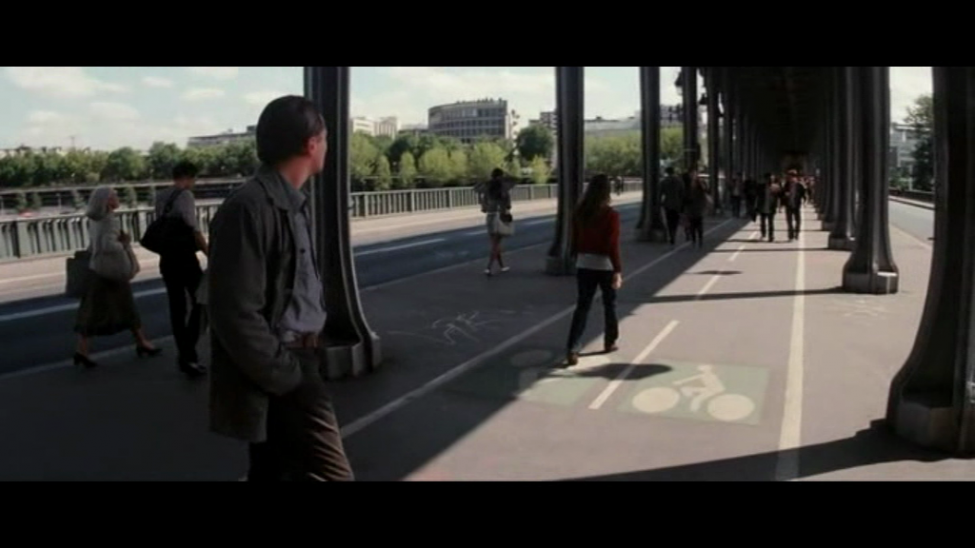
There is also a scene within the film that references a film in which
Citizen Kane sees himself reflected in a number of mirrors. In the film Ariadne takes Cobb to a point on a bridge where she manipulates the setting by moving mirrors referencing the 'dream within a dream' concept as it suggests there a a number of different realities that reflect of just one. 


Nolan also references Ori Gherst and his art in one of the scenes in inception. 


The James Bond film 'On Her Majesty's Secret Service' is also referenced by Nolan in Inception. The scene 'Battle at Piz Gloria' from Bond is an obvious source of inspiration for a particular scene in which the audience is shown another dream within Fishers dream which takes place in a snowy setting at a hospital. 


Integration of Genres:
It could be argued that Inception incorporates a number of genres within the film - Action, Thriller, Adventure, Drama & Sci - Fi. This is due to a number of certain elements that are commonly associated with specific genres, for example a countdown or time period in which a mission or task must be completed can be typically associated to an action/thriller film and is also evident within Inception as they only have a certain amount of time within each dream state etc. 

Inception - An Understanding


Monday, 13 January 2014

Shuffle Playlist - The Death Of Uncool

We were told to shuffle our iTunes, and list the first 20 shuffles to create a playlist. Here are MY results:

1. Wu Tang Clan - Method Man (Hip Hop/East Coast Rap)
2. Editors - Lights (Rock/Indie)
3. Capital Steez - 47 Piirates (Hip Hop/BEAST COAST)
4. The Strokes - Taken For A Fool (Indie Rock/Garage Rock Revival/Post Punk Revival)
5. Metronomy - Everything Goes My Way (New Wave/Electropop)
6. Danny Brown - Demons And Angels (Alternative Hip Hop/Trap)
7. Led Zeppelin - Black Dog (Hard Rock/Heavy Metal)
8. Roots Manuva - The Path (Dub/Experimental Hip Hip)
9. Arctic Monkeys - Library Pictures (Indie Rock/Post Punk Revival)
10. Enter Shikari - Warm Smiles Do Not Make You Welcome Here (Electrocore/Post Hardcore)
11. The Streets - Infamy (Uk Garage/Electronica/Alternative Hip Hop)
12. The Specials - Too Hot (Ska/2 Tone/New Wave/Reggae)
13.  Lorde - Tennis Court (Art Pop/Indie Pop/Minimal Electronica)
14. Bishop Nehru - Languages (Hip Hop)
15. Radiohead - Airbag (Electronic/Alternative & Experimental Rock)
16. Mos Def - Twilight Speedball (Hip Hop)
17. Oasis - Part Of The Queue (Brit Pop/Rock/Alt Rock)
18. King Geedorah - Next Levels (Hip Hop)
19. Mr. Muthafuckin eXquire - The Last Huzzah (Hip Hop/Alt Hip Hop)
20. The Libertines - What Became Of The Likely Lads (Indie/Post Punk/Garage Rock Revival)


All of the genres that accompany the 20 songs are taken from the internet and iTunes descriptions collectively. 

The Death Of Uncool


Brian Eno — 25th November 2009

It’s odd to think back on the time—not so long ago—when there were distinct stylistic trends, such as “this season’s colour” or “abstract expressionism” or “psychedelic music.” It seems we don’t think like that any more. There are just too many styles around, and they keep mutating too fast to assume that kind of dominance.

As an example, go into a record shop and look at the dividers used to separate music into different categories. There used to be about a dozen: rock, jazz, ethnic, and so on. Now there are almost as many dividers as there are records, and they keep proliferating. The category I had a hand in starting—ambient music—has split into a host of subcategories called things like “black ambient,” “ambient dub,” “ambient industrial,” “organic ambient” and 20 others last time I looked. A similar bifurcation has been happening in every other living musical genre (except for “classical” which remains, so far, simply “classical”), and it’s going on in painting, sculpture, cinema and dance.

We’re living in a stylistic tropics. There’s a whole generation of people able to access almost anything from almost anywhere, and they don’t have the same localised stylistic sense that my generation grew up with. It’s all alive, all “now,” in an ever-expanding present, be it Hildegard of Bingen or a Bollywood soundtrack. The idea that something is uncool because it’s old or foreign has left the collective consciousness.

I think this is good news. As people become increasingly comfortable with drawing their culture from a rich range of sources—cherry-picking whatever makes sense to them—it becomes more natural to do the same thing with their social, political and other cultural ideas. The sharing of art is a precursor to the sharing of other human experiences, for what is pleasurable in art becomes thinkable in life.

This article first appeared in the December edition of Prospect magazine

Hyperreality Examples


1.A magazine photo of a model that has been touched up with a computer.

2.Films in which characters and settings are either digitally enhanced or created entirely from CGI(e.g.: 300, where the entire film was shot in front of a blue/green screen, with all settings super-imposed).


3.A well manicured garden (nature as hyperreal).

4.Any massively promoted versions of historical or present "facts" (e.g. "General Ignorance" from QI, where the questions have seemingly obvious answers, which are actually wrong).


5.Professional sports athletes as super, invincible versions of the human beings.

6.Many world cities and places which did not evolve as functional places with some basis in reality, as if they were creatio ex nihilo (literally 'creation out of nothing'): Disney World; Dubai; Celebration, Florida; and Las Vegas.


7.TV and film in general (especially "reality" TV), due to its creation of a world of fantasy and its dependence that the viewer will engage with these fantasy worlds. The current trend is to glamorize the mundane using histrionics.

8.A retail store that looks completely stocked and perfect due to facing, creating a world of endless identical products.


9.A life which cannot be (e.g. the perfect facsimile of a celebrity's invented persona).

10.A high end sex doll used as a simulacrum of a bodily or psychologically unattainable partner.


11.A newly made building or item designed to look old, or to recreate or reproduce an older artifact, by simulating the feel of age or aging.

12.Constructed languages (such as E-Prime) or "reconstructed" extinct dialects.

13.Weak virtual reality which is greater than any possible simulation of physical reality.

Hypereality - A Definition


Hyperreality is used in semiotics and postmodern philosophy to describe a hypothetical inability of consciousness to distinguish reality from fantasy, especially in technologically advanced postmodern cultures. Hyperreality is a means to characterize the way consciousness defines what is actually "real" in a world where a multitude of media can radically shape and filter an original event or experience. Some famous theorists of hyperreality include Jean Baudrillard, Albert Borgmann, Daniel Boorstin, and Umberto Eco.

Most aspects of hyperreality can be thought of as "reality by proxy." Some examples are simpler: the McDonald's "M" arches create a world with the promise of endless amounts of identical food, when in "reality" the "M" represents nothing, and the food produced is neither identical nor infinite.[1]

Baudrillard in particular suggests that the world we live in has been replaced by a copy world, where we seek simulated stimuli and nothing more. Baudrillard borrows, from Jorge Luis Borges (who already borrowed from Lewis Carroll), the example of a society whose cartographers create a map so detailed that it covers the very things it was designed to represent. When the empire declines, the map fades into the landscape and there is neither the representation nor the real remaining – just the hyperreal. Baudrillard's idea of hyperreality was heavily influenced by phenomenology, semiotics, and Marshall McLuhan.

Modernism - A Definiton


In the field of art the broad movement in Western art, architecture and design which self-consciously rejected the past as a model for the art of the present. Hence the term modernist or modern art. Modernism gathered pace from about 1850. Modernism proposes new forms of art on the grounds that these are more appropriate to the present time. It is thus characterised by constant innovation. But modern art has often been driven too by various social and political agendas. These were often utopian, and modernism was in general associated with ideal visions of human life and society and a belief in progress. The terms modernism and modern art are generally used to describe the succession of art movements that critics and historians have identified since the Realism of Courbet, culminating in abstract art and its developments up to the 1960s. By that time modernism had become a dominant idea of art, and a particularly narrow theory of modernist painting had been formulated by the highly influential American critic Clement Greenberg. A reaction then took place which was quickly identified as Postmodernism.

From Tate glossary.